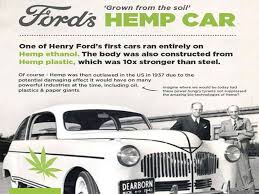
The extraordinary uses of hemp can be agreed upon by stoners, engineers, and stoner engineers. Many of these applications sound so preposterous said aloud that they read like conspiracy theories and yet, one in particular keeps popping up again and again — Henry Ford’s hemp-fueled car is a legend that just won’t remain buried. Is there any substance to the story or is it simply a fun fairytale for the cannabis lovers among us?
Fact or Myth?
Well, the truth is somewhere in between. The soybean car would be a more accurate title for the automobile Ford created from agricultural plastic. More specifically, the fenders and the car body were made from a highly durable material derived from soybeans, wheat, corn, flax, ramie, and — yes, hemp.
The body of the car, produced through George Washington Carver’s work, was lighter and more fuel efficient for that reason compared to the heavier body of a normal metal vehicle. The completed prototype premiered at a festival in Dearborn, Michigan in 1941.
Where it seems people may have exaggerated the notion of the hemp car is that it was constructed from a variety of plant derivatives. But the vehicle was designed to run on hemp fuel.
By the end of World War II, steel became a little less scarce once again and with its resurgence, the concept of the plastic car was abandoned. Others claim that Ford’s investment into the development of the plastic car was for naught and that all of the research resulted in whip cream.
Why did Ford want to create a hemp-fueled car?
Ford stated that he would grow automobiles from the ground. He intended on integrating industry with agriculture and he believed that these plastic-bodied cars would be safer than their metal counterparts. This would have also solved the issues with a shortage of metal during World War II.
Furthermore, Ford loved the farmers and felt an affinity towards the working class, wanting to help them during the Great Depression. He understood that the demand for cars weren’t going anywhere, but if he could steer that demand towards something agricultural, then he could ensure the farmers would have a real shot at thriving and coming out of the Depression in as decent shape as anyone.
How much hemp was involved in the making of plastic cars?
Many cannabis websites push the idea that the bioplastic car was made of 70-100% hemp. By most estimates, the cars weren’t even made of nearly 50% hemp. The car was composed of about 70 percent cellulose fibers of which hemp was one variety, so we may be looking at 10 to 20 percent hemp at the most.
However, the diesel engine was designed to run on vegetable and seed oils like hemp. Ford’s original intention was for his vehicles to run off of vegetable oils as the diesel was designed, having calculated that in just a year’s yield of an acre of potatoes, one could power the machinery necessary to cultivate the fields for more than a century.